
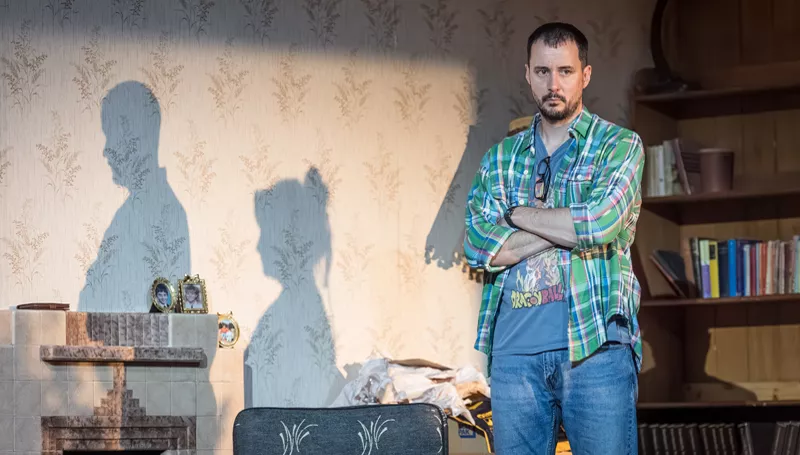
“Relics” at Lyric Hammersmith
Maryam Philpott in West London
★★★☆☆
25 June 2026
Billed as a family drama about siblings gathering in the aftermath of their mother’s death, Ben Ockrent’s new play Relics (premiering at the Lyric Hammersmith) is heavy on the plot drama but a bit lighter on establishing a consistent or even illuminating family dynamic. Quick to get distracted by a moral dilemma and the repetitive verbal and physical fights it leads to, Relics does too little to properly ground itself in character, the complex sibling and parental relationships that sit behind their petulant behaviours, or in creating a stronger presence for their absent mother.
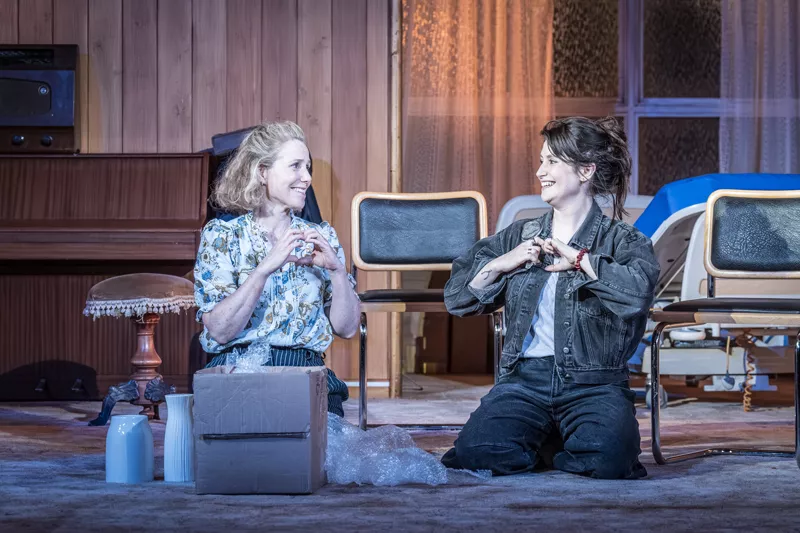
Sally Phillips and Charly Clive.
Photo credit: Marc Brenner.
Meeting at the family home to divide up their mother’s possessions before the house is sold, eldest adult child Olivia tries to keep order when the long absent Jonny returns and requests a small insignificant-looking painting. But not all is as it seems and when the family, including middle child Rob and youngest Michelle, take sides, their afternoon is quickly sidetracked by a series of revelations.
Ockrent’s play draws on a number of influences in the construction of a story that relies on navigating the ghosts of the past, trying to unpick the actions of previous generations and making contemporary judgements on how to respond. There is the loose shape of Reginald Rose’s Twelve Angry Men – although not nearly as well controlled – in Jonny and Olivia’s attempts to sway the allegiance of their brother and sister. But there are also tones of Branden Jacobs-Jenkins’s Appropriate which similarly dealt with a troubling legacy, as did Marius von Mayenburg’s Nachtland which presented an almost identical dilemma about wartime appropriation of goods. Relics is most interested in the latter and has a good go at presenting the arguments for and against profiteering from the family discovery, as well as clear research on the commercial complexities of provenance in the art market.
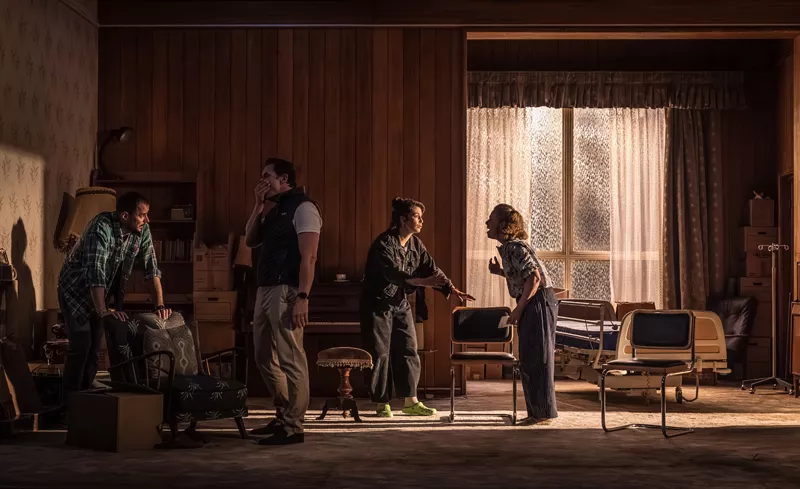
Set design by Joanna Scotcher.
Photo credit: Marc Brenner.
While that is interesting up to a point, Relics doesn’t move much beyond this surface to dig into the family positions with the different troubles, traumas, and shared experiences that unite and divide them. There are only tiny hints in Act One of a distance between Jonny and Michelle that may be age and gender related but could be much more; Rob begins with medical issues in his own family that return as a late-stage revelation but little context is provided as the character, along with Michelle, takes a back seat during the play. Does Jonny’s determination to have the painting speak to some form of trauma for which he is seeking reparation and why is Olivia determined to do the right thing? In focusing on the painting, Ockrent misses these bigger questions and how the shared childhood and value system of these people influences their adult actions.
These are essentially character sketches not helped by director Michael Longhurst’s placement of them in the dated living room designed by Joanna Scotcher, standing awkwardly for long periods in a line which impedes the natural connection between them. The two central performances lift the characters off the page with Sally Phillips in particular exuding the long put-upon angst of Olivia who no one has ever appreciated but can’t do without, while JJ Feild as the more glamorous Jonny is quickly dragged back into the small life he thought he had escaped. It’s just a shame that Sam Swainsbury’s Rob and particularly Charly Clive’s Michelle are not as well formed.
Relics doesn’t always quite know where it wants to take the characters or what the outcome of the central dispute should be, but many will recognize and enjoy the petty family squabbles and the inability to ever shake off the formative past you have shared with your siblings.


