“Allegra” at Harold Pinter Theatre
Maryam Philpott in the West End
★★★☆☆
12 July 2026
Be careful what you wish for in Peter Quilter’s new Maureen Lipman vehicle, for in our drab world, demanding the removal of free-spirited joy – however annoyingly bubbly – can only make things worse. Transferring to the Harold Pinter Theatre following a UK tour, Allegra arrives in the West End with a singular message to sing through the good times and the bad. Essentially constructed from four sitcom episodes it is a pleasant evening out but never really dips below the surface of its mental health themes, preferring instead to paint rainbows and hope for the best.
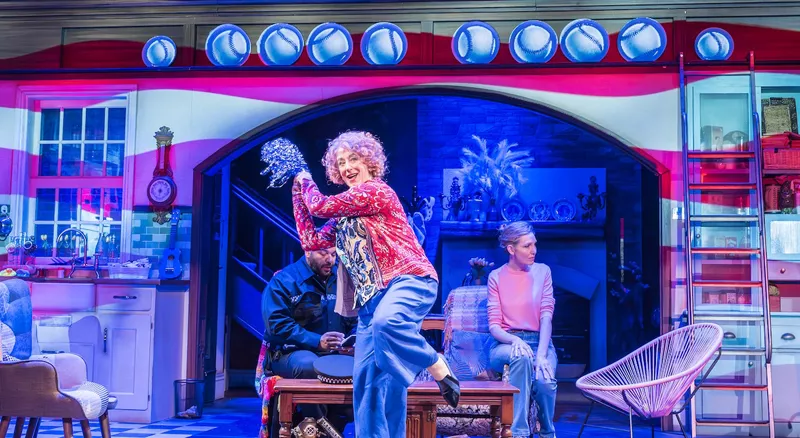
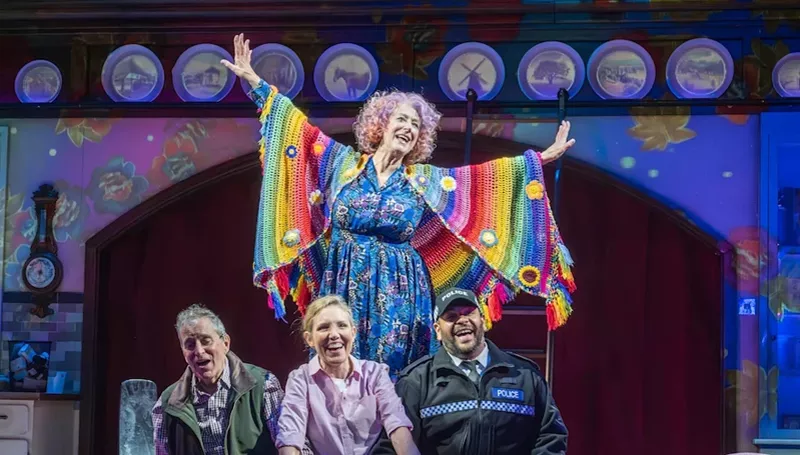
Maureen Lipman (foreground).
Photo credit: Marc Brenner.
Living in a village filled with unhappy residents, Allegra’s endless cheerful singing frustrates café owners, librarians, and petrol station workers who complain to the police about her frequent breaches of decorum. Warned to remain at home, even her neighbours no longer want to hear her Ave Maria at 3 a.m., leaving brother Ronen and new carer Anna to find ways to stifle her exuberance before Allegra goes too far.
Quilter’s play really does have a point about the ways in which modern societies block simplistic joy from their lives and how easily we forget the contentment and wellbeing that comes from engaging in arts and culture. In the character of Allegra – performed by Lipman with free-spirited verve that is often endearing – the writer rediscovers the childlike glee of fantasy and dreams accessed through all kinds of music from classical and musical theatre to pop tunes largely from the 1930s to the 1960s. And there is some emotional mileage in the attempts to dampen her joy to make her like everyone else with Lipman certainly earning the audience’s affection in the role. It makes an interesting comparison to her role as New York socialite and tone-deaf opera singer Florence Foster Jenkins in Quilter’s 2005 comedy Glorious!
The show is also riven through with fantasy musical sequences as Allegra zones out of conversation and enters a magical alter ego in her head singing show tunes staged with colour and enthusiasm by director and choreographer Stephen Mear, filling the stage with glitter as the show segues into full musical routines, including steps echoing Gene Kelly’s masterful work in the title sequence from Singin’ in the Rain, albeit in a light farce comedy format. The contrast between the drab but perfectly nice living area and these imagined worlds represents the very different way Allegra sees the world and rightly asks, as she does, instead of bringing her down, why not bring everyone else up?
Yet the tone and humour is so lightweight that it daren’t delve into the issues it raises, preferring the sitcom format of big characters, unlikely encounters, and familiarity over questions about medicating mental health conditions or addressing our inability to accept non-conformity. It’s all satirical fun but the real message sometimes gets lost. Despite being a brand-new play, the writing occasionally feels dated with two jokes using lesbianism as the punchline for a straight woman – particularly disappointing at the end of Pride month – and a dismissive throwaway comment about the Czech language sounding made up.
Described as “an unwanted hurricane”, Allegra eventually becomes a whimsical hero with Dame Maureen even offering an Elvis impression as her character tears through the comedy, stealing it entirely from co-stars John Middleton as gloomy brother Ronen, Elizabeth Bower as a fairly typical carer, and Bailey Patrick as a local policeman who gets swept along. Ultimately, though, it is a sweet show that demands very little from anyone.