“The Cannibals of McGower County”, TheaterWorks, Hartford
Robert Schneider in Connecticut
★★★★★
19 August 2026
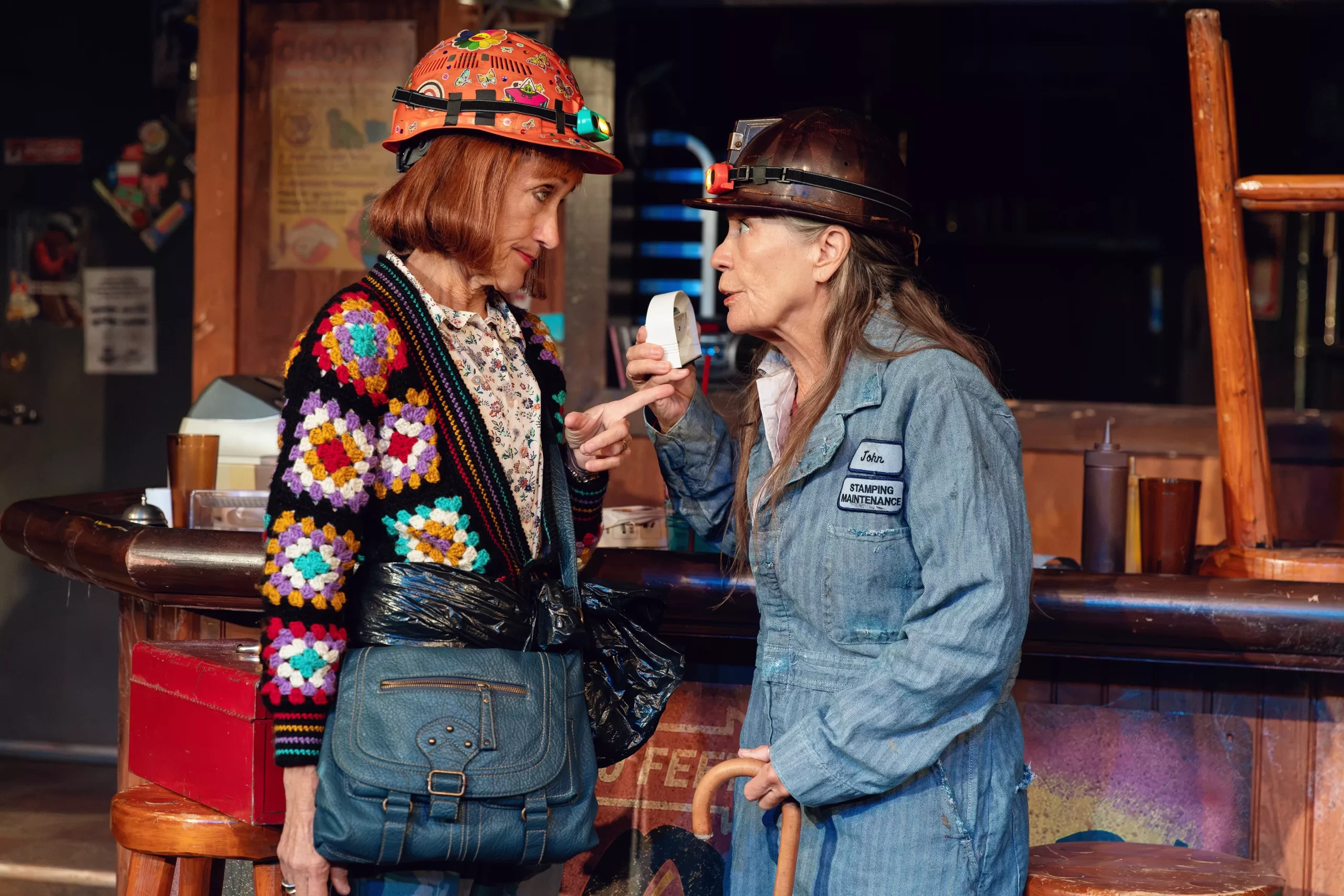
She tells her accomplice that they had to drive four hours to burgle this abandoned bar because it would draw suspicion if they worked too close to home. If home were elsewhere than Texas, four hours on the road would probably put them in a neighbouring state. As it is, this fictional county, set somewhere in the endless sagebrush that dots the western part of the Lonestar State is halfway between hell and nowhere. Drew Larimore’s The Cannibals of McGower County needs just such a remote locale for a quartet of damaged characters that the actors imbue with all the quirks and foibles of the Southern Gothic form. In West Texas, almost anything is credible.

Photo credit: Curtis Brown Photography.
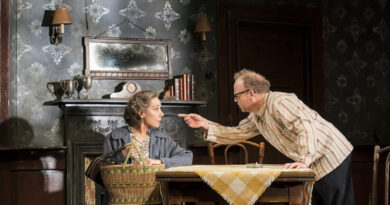
The speaker is Lindalyn, a lame and ornery old reprobate who would be perfectly at home in a Tennessee Williams play or a Dickens novel. Her partner in crime is Viola, a female her age who is simple enough to need the basics of criminal method explained to her at the top of the play. (“Leave the silverware!”) Like Beckett’s Hamm and Clov, the two women’s intellectual differences are the mirror image of their physical states. Lindalyn leans heavily on her cane; Viola is active but flighty.
They have driven these four hours to break into a bar that closed back in the day when bars had cigarette machines. (Tim Mackabee’s fully-realized set regorges period details of all types. I counted six electric fans. Clearly the bar died before air conditioning became de rigueur.) They now proceed to pillage it of near-worthless items the proceeds from whose sale wouldn’t come near paying for their gas. Lindalyn eagerly tapes together sets of 50-cent salt and pepper shakers. Viola goes into ecstasies over a plywood piggy wall decoration with a tail made of real twine. Their most valuable acquisition is an antiquated cash register. The burglars aren’t shy about making noise and don’t seem to be in a hurry, but for some reason Lindalyn sets a kitchen timer. She’s the brains of the operation.
We get the impression that their life of crime is mostly meant to get two elderly women out of the house and doin’ sumpthin’.
The plot requires that they be interrupted, of course. When it happens, it’s a wastrel oil heir and his blonde waif of a girlfriend who do the honours. It seems the oil heir has just bought the town the bar is part of. He’s chosen this night and this venue to propose to Sarah Nell—that is the waif’s name. The wastrel will later introduce himself as “Blaze,” to which Viola responds “That’s not a name; that’s a natural disaster.” In this universe, being simple-minded doesn’t preclude witty repartee—it may actually improve it.
Playwright Larimore goes with strong dramatic choices throughout, including some pungent coincidences: Blaze and Sarah Nell must also have driven four hours to this isolated spot because Sarah Nell lives with her mother and her mother turns out to be none other than…
Well, I won’t reveal the secrets of the play. Concerning which character chokes to death on a root beer mint, my lips are sealed. After all, unlikely events in a play can be digested if the atmosphere becomes thick enough and the atmosphere in Mr Larimore’s drama thickens progressively like layers of tumbleweed blown against a barbed-wire fence.
The actors go full-throttle throughout. Annalee Jefferies hits the high notes of Lindalyn’s outrage almost obsessively, but the character has her reasons and Jefferies does them justice. Constance Shulman threads the needle of Viola, a clever simpleton with a Shakespearean name whose weaknesses have been exaggerated by others for their own purposes. Edward Hoke is a likeable failure of a venture capitalist aiming small. As his love interest, Gus Birney often devolves into petulant whining, but some men find that endearing.
Director Jen Wineman has been shepherding this project through readings and “developmental opportunities” for years. (Larimore confides in a program note that the play has been in gestation, in one form or another, for a decade.) Often when a new play gets heard-and-critiqued in multiple venues everything original and fetching about it leeches away before the first full production. That has not happened in this case; the play is as cross-grained and violent as a brahma bull let out of a rodeo holding pen. The piece benefits from consistently good decisions by Alejo Vietti (costume design) and Jiyoug Chang’s (lighting design). Whether you love or hate the result, Larimore and Wineman deserve credit for sticking to their guns.