“a small and quiet light” at the Orange Tree Theatre
Maryam Philpott in South-West London
★★★☆☆
27 September 2026
“She disappeared into the night and the fog”, so the story of Special Operations Executive (SOE), agent Noor-un-Nisa Inayat Khan felt incomplete to writer Stephanie Street, who uses her new play a small and quiet light to celebrate Khan’s multiple identities and to offer a more fitting memorial of her bravery. Directed by Elin Schofield at the Orange Tree Theatre in a co-production with Chichester Festival Theatre where it premiered in August, Street’s play feels the weight of its documentary research, pulling together a clear biography of Khan’s life. However, while the protagonist is admirable and charming, the play prioritizes exposition above analysis.

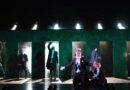
Kiah Arya and Young Noor.
Photo credit: Marc Brenner.
Khan enjoys her childhood in a traditional Indian family in Paris, learning to play the piano and devoted to her Abba. But disruption follows when war breaks out and the family flee to Britain. Feeling an unquenchable desire to do her duty, Khan joins the SOE and returns to France in 1943 as the first female radio operator to be sent undercover there. Under the codename of Madeleine she seems uncatchable, but danger and betrayal lurk just around the corner.
There are some strong elements to Street’s play that perhaps don’t entirely fulfil their potential but offer a valuable contemporary resonance. At different points of the story the audience learn through interviews with British and German military personnel that Khan was born in Russia and has Indian heritage, while living in France and fighting for Britain. It is suggested that this influences the great humanity she demonstrates, while her sense of duty is strongly implied if never articulated in detail. But Priyanga Burford certainly shows Khan relishing the opportunity to outmanoeuvre her interrogators when directly challenged about her multi-heritage background.
The play also begins a thought on Khan’s trusting nature balanced with the risk of living in Nazi-occupied France. She is open and honest always, a character preferring to evade than lie. There is some effective physical detail from designer Anna Yates showing Khan’s presence in France, including her carrying a large suitcase containing her wireless and the frequently remarked-upon blue suit which is worn throughout. Her betrayal comes from this notorious visibility, but Street seems reluctant to criticize her subject, registering only Khan’s refusal to believe anyone would betray her. The story remains factual and heroic when it could delve deeper with no detrimental effect on Khan’s reputation.
Burford’s portrayal of Khan is highly layered and enjoyable, capturing the different stages of her life from her childhood in the 1920s through training, operation, and capture, building a remarkably warm rapport with everyone she meets. Throughout, there is a steely sense of duty, unwavering regardless of any personal danger and dedicated to fulfilling her mission. A role designed around her, Burford’s performance is the lynchpin of the show.
Other characters – built again principally from documented facts – are less well drawn. So the chance to explore chief interrogator Vogt (an equally warm Caoilfhionn Dunne) who forgets he and Khan are enemies, or any of the other figures embodied by Paksie Vernon, Léa des Garets, Tripti Tripuraneni, and Amanda Hadingue, becomes a missed opportunity, weakening the overall effect of the drama.
An engaging play about an admirable woman, with an all-female cast, a small and quiet light needs a little more grit to lift this dramatization out of the archive.