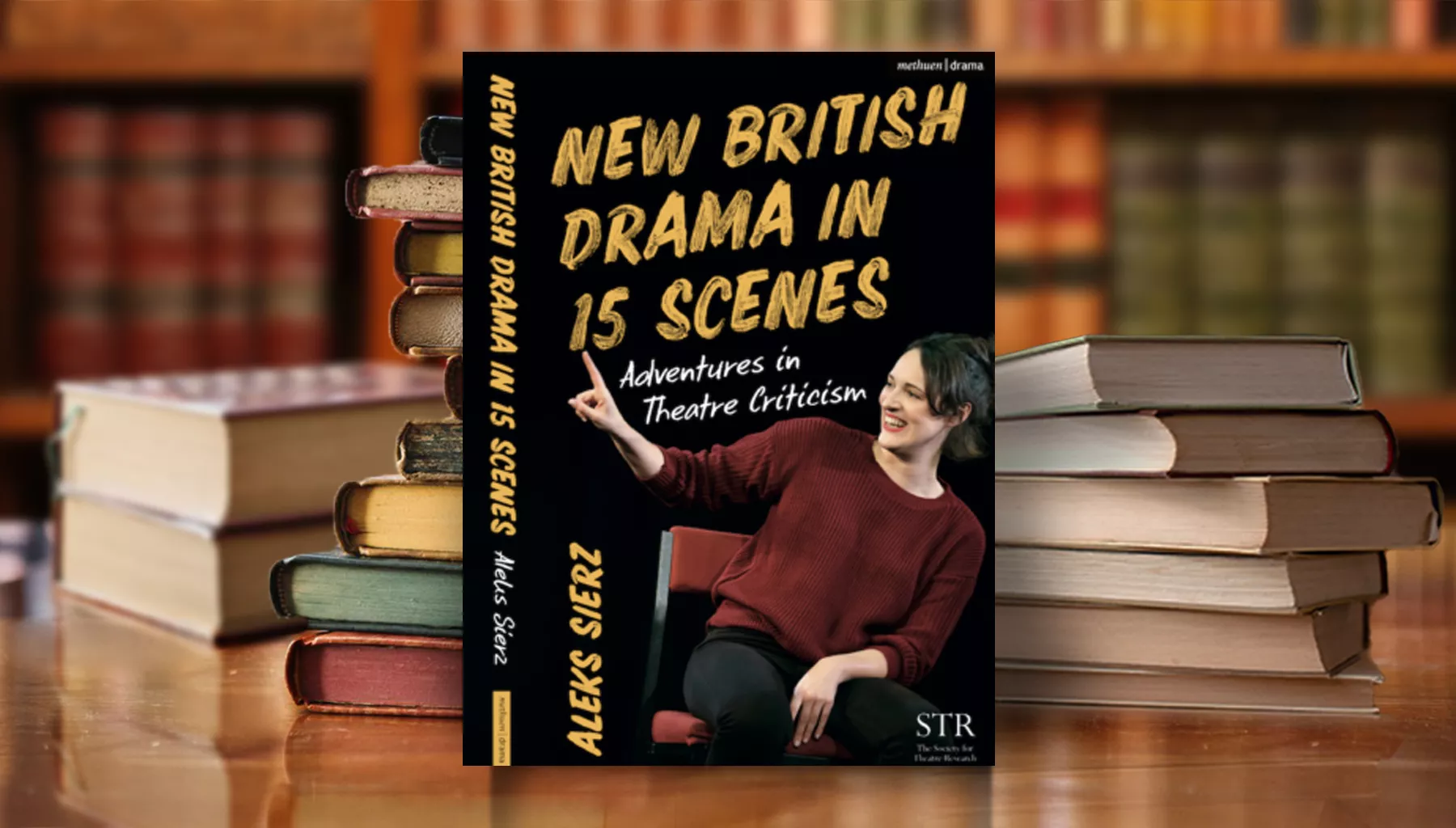
“New British Drama in 15 Scenes: Adventures in Theatre Criticism” by Aleks Sierz (Methuen Drama)
Book review by Maryam Philpott
New playwriting and innovative revivals are driven by questions of who we are, why do we do what we do, and where we are going, yet in the ceaseless cycle of performance delivery and review theatremakers rarely have time to step back and consider the big state of theatre questions and what to do about them. So, we need those like writer and critic Aleks Sierz to provide these broader thematic assessments of what theatre means today.
This he does in his latest book New British Drama in 15 Scenes that reflects on new British writing in the 2010s, a large topic told in an elegant and comprehensive 165 pages, taking in everything from adaptations and history plays to political writing, Brexit, and dystopian works, thinking about the impact and legacy of the decade on contemporary drama.
What could easily have become an academic checklist of plays and musicals in various categories is given a bit of style in Sierz’s more lively and engaging narrative arrangement in a period he describes as “a decade of unprecedented theatrical variety”.
Embodying that statement through the structure of the book, Sierz approaches this summary of hundreds of shows in lots of different and entertaining styles, breaking up the potential monotony of listing works that even the most ardent theatregoer may find obscure as well as the more popular creations and recognizable names. From sociological reports to artists’ impressions and proceedings from a “gender and performance study day”, Sierz is ever inventive in finding multiple interesting entry points for the reader.
And in a just novella-length text, Sierz crosses his thematic structure with all of the emerging and significant writers of the 2010s, many of whom have since become established and acclaimed leaders of the industry, including Lucy Prebble, Jack Thorne, Lucy Kirkwood, Phoebe Waller-Bridge, Mike Bartlett, Jez Butterworth, Laura Wade, Roy Williams, and James Graham (although the definition of Graham as just a “political playwright” has been reassessed post-2020).
But there are also plenty of writers whose names are less familiar and whose work made an impact in this period, raising interesting questions about their career trajectories since.
What does this tell us about the longevity of playwriting careers especially for women and writers from diverse backgrounds, and what insight should be gleaned about the limitations of the commissioning, funding, and sustainability of new writing in the industry? Although this is not the purpose of the book, it leaves behind further questions about the meaning and implications of the data that the author presents.
Written during the pandemic and only published now five years later, halfway through the next decade of theatre writing, what does it mean to produce this book now when so much has changed for the individuals it covers and support for new writing appears to be in decline?
Nonetheless, the benefits of Sierz’s critic-academic approach is a breadth of perspective, seeing work by established as well as new writers while also exploring prominent regional theatre alongside the London-centric West End view. New British Drama in 15 Scenes offers a clarity of writing which makes this book highly accessible for general and specialist readers. Whether or not you agree with every assessment is all part of that fun (“he rated that play but doesn’t mention this one”).
Still, no one takes the long view on theatre’s development as well as Sierz, and this important study of the 2010s leaves you wanting to see all of these works again and intrigued to know what his view on the quite different 2020s might be.