The Rat Trap at Park Theatre
Neil Dowden in North London
★★★☆☆
5 February 2026
This centenary revival of Noël Coward’s youthful play The Rat Trap (“reimagined” by Bill Rosenfield) is a rare chance to see the Master’s work when he was still learning his trade. Indeed, even Coward himself never got to see it – he was busy with another play in New York when it premiered briefly at the Everyman Theatre, Hampstead in 1926 – and since then it has only been staged in London once, at the Finborough Theatre 20 years ago. But even if it is an apprentice piece it is far from juvenilia in its ambivalent and provocative portrayal of tangled relationships in a creative environment, which Coward explored with more sophistication later in his career. Though it contains some witty lines, this is very much a dramatic rather than comic work for which he became best-known, with a surprisingly downbeat ending.
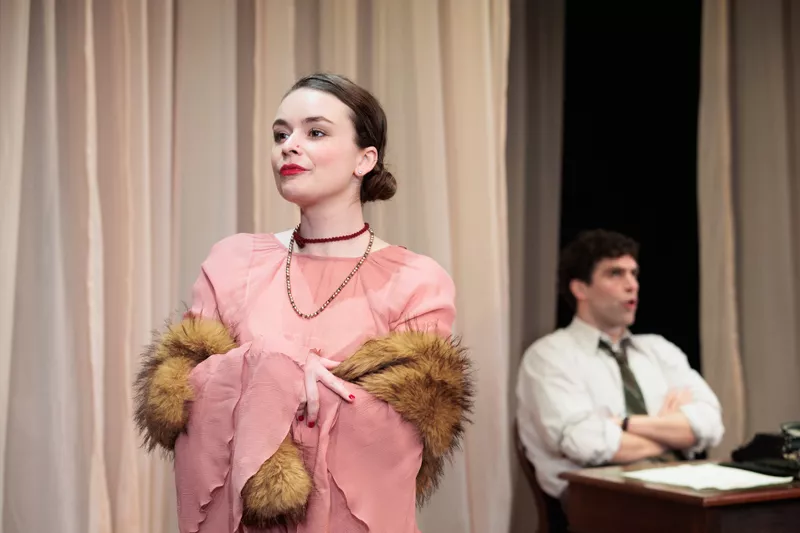
Zoe Goriely and Ewan Miller.
Photo credit: Mitzi de Margary.
In fact, Coward was only 18 (and recovering from a nervous breakdown in hospital at the end of World War I) when he wrote The Rat Trap, his first solo play, though it was not staged until eight years later, after he had his breakthrough succès de scandale with The Vortex. But it’s a remarkably precocious play about a rocky marriage between artists, in particular, which must owe much to the fact that he had been a professional actor since age 11 and observed at close quarters liaisons between theatre folk. It is also notably sympathetic towards women, whose marginalization in a heterosexual patriarchy he may have identified with as a young gay man. Cosy conjugality was never going to be an option for him.
The play starts off as a light comedy, but develops into something much darker. Sheila is leaving her Kensington flatmate Gina to marry Keld, and the young couple are evidently much in love. Sheila has just started to make a reputation as a novelist, while Keld is a promising playwright, so their bond seems strong. But Gina – herself a successful gossip columnist, now single but once married – warns Sheila only half-humorously: “When two brilliant egoists marry, unless one of them is prepared to sacrifice certain things, there is bound to be trouble.” She fears it is her friend – as a woman – who will be forced to play second fiddle. And so it proves.
In their new home together in Belgravia, Keld not only occupies the study with a desk and typewriter, while Sheila has to write in their bedroom, he expects her to sort out all the domestic arrangements with their housekeeper/cook Burrage so that he is not distracted from his all-important work. When Keld insists on Sheila listening to him reading out his draft and she responds with some constructive criticism, he takes offence and they argue heatedly. She says they are “like two rats in a trap, fighting, fighting, fighting”. Meanwhile, he is attracted to the flirtatious actress Ruby who is angling for a better role in his next play after the success of the previous one. As he becomes more self-absorbed – reading out loud his rave reviews – Sheila becomes subdued and stops writing, turning into just a supportive housewife. But when she finds out he has been unfaithful she’s had enough.
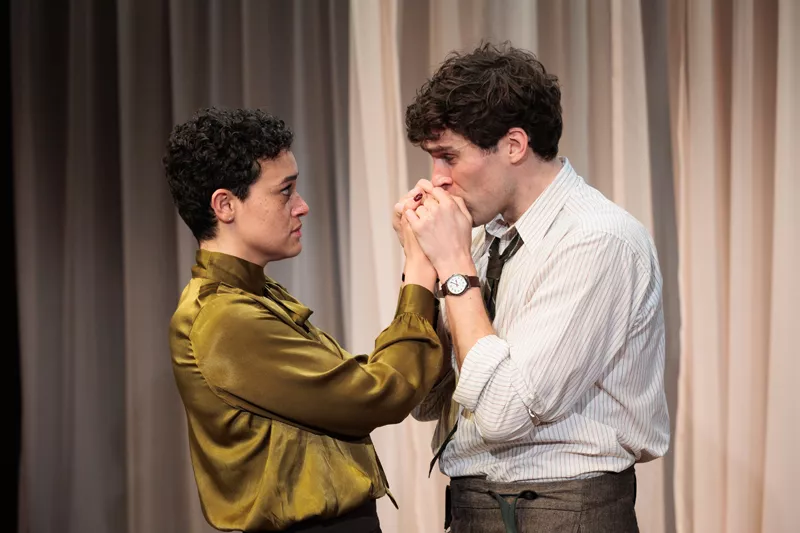
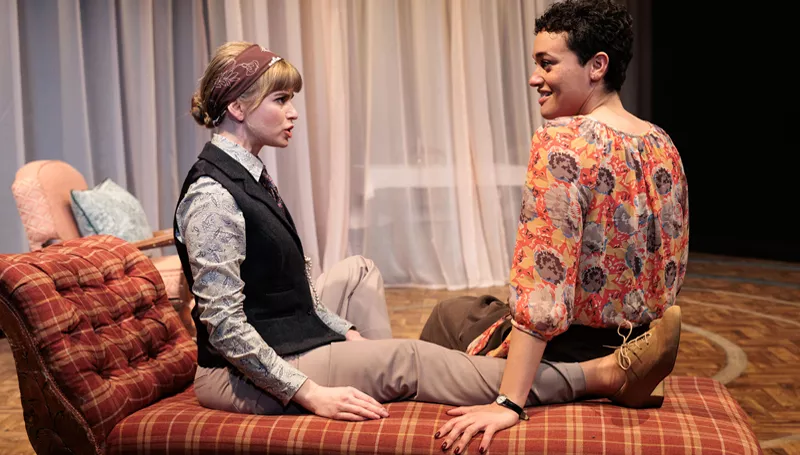
Lily Nichol and Ewan Miller.
Photo credit: Mitzi de Margary.
Coward’s representation of marriage as a “rat trap” may seem barbed, but it’s specifically about the union – or disunion – of a couple trying to forge their artistic careers while leaving enough space for their relationship to flourish. Coward shows a warm understanding of the challenges to female self-determination in an unequal society – women didn’t even achieve voting parity with men until ten years after the play was written, let alone bridge the economic divide. The play is also daring for its time in presenting alternatives to conventional heterosexual marriage. Apart from Gina’s solo independence, there is a mildly satirized “bohemian couple”, romantic novelist Naomi and poet Edmund, who believe in “free love”. Ruby uses her femininity to get what she wants in a transactional way, while even Burrage apparently has had some “fun”.
Coincidentally, another early Coward work, Fallen Angels (written after The Rat Trap but premiered the year before), is currently on stage in London at the Menier Chocolate Factory. Unlike The Rat Trap it is an out-and-out comedy but it too has a slightly risqué quality in its depiction of female sexuality and questioning of marriage conventions. This production of The Rat Trap directed by Kirsty Patrick Ward (and presented by Ashley Cook for Troupe, who previously staged Galsworthy’s The Forsyte Saga and Isherwood’s A Single Man at Park Theatre) takes a little while to get going but catches fire during the couple’s quarrels (perhaps presaging Private Lives). Designer Libby Watson’s set is more functional than elegant, while the costumes cleverly reveal the characters’ (changing) status, including Sheila swapping loose-fitting slacks for a doll-like dress and Keld going from casual to tweedy.
Lily Nichol convincingly charts Sheila’s decline from bubbling confidence to muted melancholy to assertive pragmatism. Ewan Miller shows how Keld’s boyish charm lapses into entitled arrogance then guilty neediness. Olive Lloyd-Kennedy conveys Gina’s cynical wit but also her staunch friendship. Ailsa Joy is the amusingly pretentious Naomi and Daniel Abbott the socially awkward Edmund. Zoe Goriely is scene-stealing as the manipulative and backbiting Ruby, while Angela Sims hints at a shrewd experience of life behind the unmarried Burrage’s loyal service.