“Data”, Lucille Lortel Theatre, West Village
Glenda Frank in New York
★★★★★
29 January 2026
Errors in judgment – and coding – can last a lifetime. They become even more dangerous when corrupted by ambition, greed, and willful blindness. Data, Matthew Libby’s off-Broadway debut play at the Lucille Lortel Theatre, explores the threat from the perspectives of two young computer analysts who must choose between self-interest and the public good. It’s a timely, heart-wrenching play directed by Tyne Rafaeli (Becoming Eve) in a brilliantly realized production.
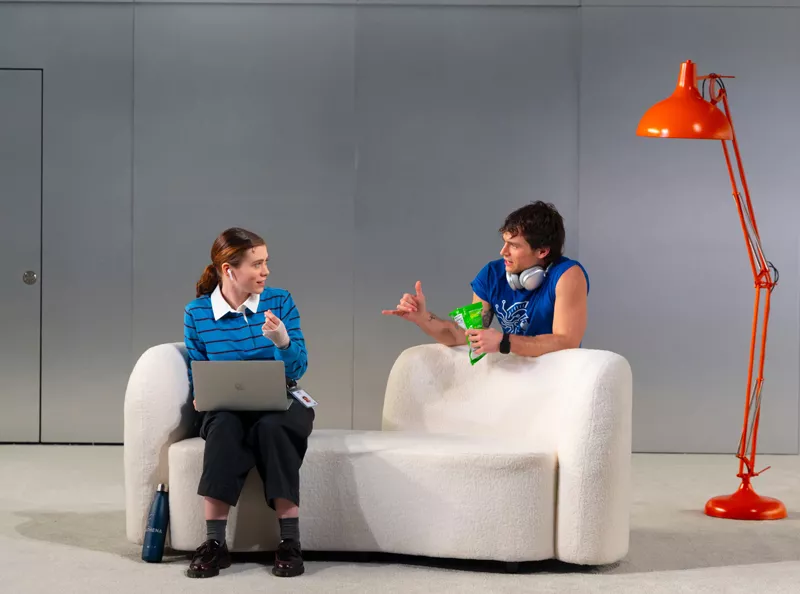
Photo credit: T. Charles Erickson.
As a computer coder, Maneesh (Karan Brar, Diary of a Wimpy Kid) is overqualified for his job at Athena Technologies, but it’s the path he chose. Riley (Sophia Lillis, The Chair Company) is a former classmate employed by Data Analytics. She is dismayed to see the star of her graduating class employed as a coder. She talks him up to Alex, her boss. After researching Maneesh, Alex (Justin H. Min) immediately interviews him. As a student, Maneesh had developed break-through algorithms that identified the occurrence of rare events in baseball. The protocol when applied to visa applicants would be a boon for the company’s contract with Homeland Security. The programme had received a great deal of attention, so Maneesh, following the advice of his advisor, secured copyright after recognizing its significant shortcomings. Athena and Homeland Security, indifferent to its potential abuses, are willing to pay big bucks for access – or anything else Maneesh might want. Alex is handing him his future on a silver platter.
On the other side, Riley has devised a plan to leak the Homeland Security project to a newspaper although, like the other engineers, she signed a non-disclosure agreement. With tight security checks at Athena, she needs Maneesh’s help to smuggle out supporting data. Maneesh is damned if he does, damned if he doesn’t.
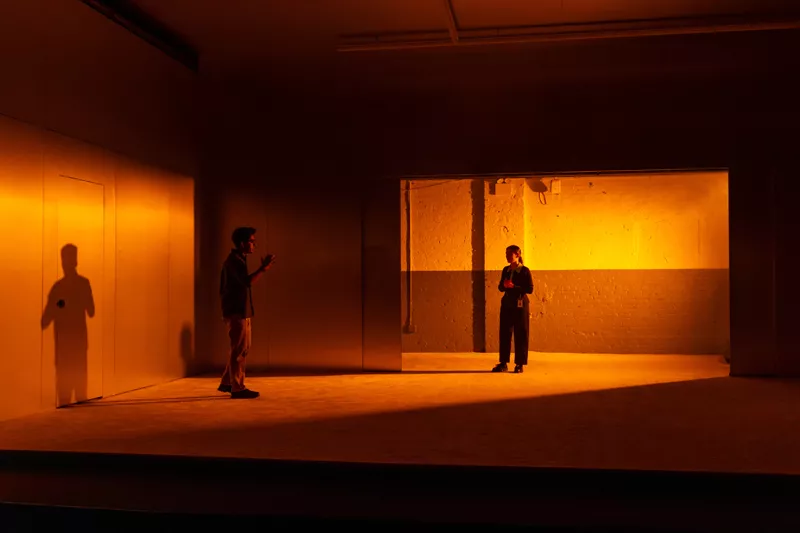
Photo credit: T. Charles Erickson.
Each character’s internal conflicts make them easy to identify with. Maneesh, the less successful surviving son of Sikh immigrants, is the family’s American Dream. When he ran his parents’ information through a beta copy of his programme, he learned that they would have been rejected for a visa. Unable to decide if he should support Riley, he seeks out Jonah, his ping-pong buddy and Athena mentor, for advice. Jonah (played by Brandon Flynn) knows that knowledge is power.
Riley is the voice of conscience. Raised by a single mom, whom she is now supporting, she is carrying overwhelming student debt. She realizes that by violating the NDA, she might be ending her career. Alex, after struggling with many career obstacles, is finally financially secure and an expectant father. And Jonah is ambitious but knows he has serious professional limitations.
The production values are impressive. Despite the slow start to the play, Rafaeli keeps matters crisp and energetic on Marsha Ginsberg’s clean, functional set. Lighting designer Amith Chandrashaker brings his own shots of adrenaline, not just in the lighting variations but also in the frame around the stage during scene changes that blinks, changes colours, and is always on the move. The seemingly casual contrast of dark neutral costumes with neon colour highlights was a painterly delight.
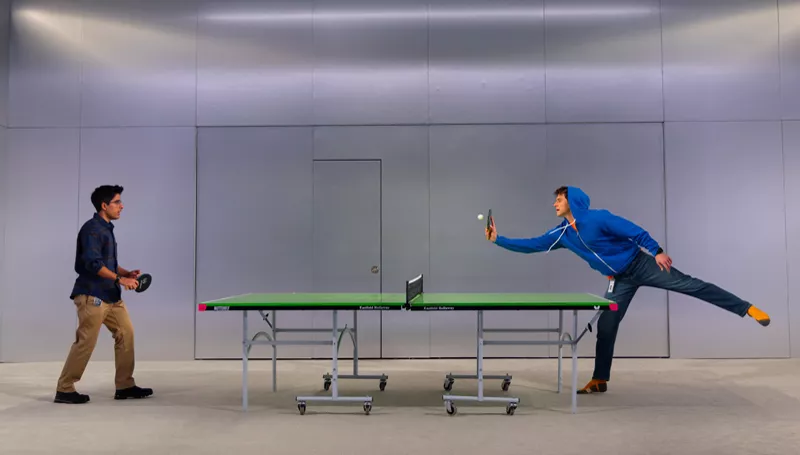
The sound design and original music by Daniel Kluger was the best I’ve heard in some time. The play opens with Maneesh and Jonah playing ping-pong. The bouncing ball provided a background metronome for their dialogue. (Libby had written ping-pong exchanges into the script.) Between scenes, the mostly atonal music has a life of its own, introducing us to the textures and tones of the episodes. I’m not a fan of background music in general (especially in films) because it either seems random or too much on the nose. Maybe Kluger (Marjorie Prime, Good Night and Good Luck) will become the harbinger of a new approach?